
Table of Contents
What Is YW? (Primary Meaning)
Why This Meaning? Tone & Emotion
Other Meanings of YW (Context Matters)
When to Use It & When to Avoid It
Real Conversation Examples
Related Slang
Platform Differences
FAQs
Conclusion
YW Meaning in Text, Snapchat, Instagram & Roblox – Complete Guide
If you’ve received “YW” in a message and wondered what it means, you’re not alone. YW is a common texting abbreviation used across social media, gaming, and chat platforms. Here’s a full breakdown of YW meaning from a girl, a guy, Snapchat, Instagram, Roblox, and even “dirty” slang meanings.
What Does YW Mean in Text from a Girl?
When a girl texts YW, it most commonly means:
👉 You’re Welcome
It’s a polite reply after you say “thank you.”
Example:
You: “Thanks for helping me!”
Girl: “YW 😊”
Tone can vary:
Friendly
Polite
Flirty (depending on emojis)
Casual and short
Sometimes adding emojis changes the vibe:
“YW ❤️” → Warm / affectionate
“YW 😎” → Playful
YW Meaning in Text from a Guy
When a guy sends YW, it also usually means:
✔ You’re Welcome
Guys often use abbreviations to keep replies short.
Example:
“Thanks bro!”
“YW 👍”
It can sound:
Casual
Neutral
Friendly
Brief (not necessarily cold)
What Does YW Mean on Snapchat?
On Snapchat, YW almost always means:
✔ You’re Welcome
Because Snapchat is fast-paced, users shorten common phrases.
Example:
“Thanks for the streak!”
“YW 🔥”
What Does YW Mean on Instagram?
On Instagram, YW also means:
You’re Welcome (in DMs or comments)
Casual acknowledgment after a compliment
Example:
Comment: “Love your post!”
Reply: “YW 😊”
What Does YW Mean Dirty?
In most cases, YW does NOT have a dirty meaning.
However, in rare slang or adult conversations, tone and context could change meaning depending on emojis or surrounding words.
But generally:
YW = You’re Welcome (safe and polite)
There is no widely recognized “dirty” meaning for YW.
YW Meaning on Urban Dictionary
On Urban Dictionary, YW is primarily defined as:
You’re Welcome
Casual texting abbreviation
Urban Dictionary may list joke variations, but the dominant meaning remains the polite response.
What Does YWW Mean in Text?
YWW usually means:
👉 You’re Very Welcome
or
👉 You’re Welcome With Warmth
It adds extra friendliness or emphasis.
Example:
“Thanks for everything!”
“YWW ❤️”
It’s just a more expressive version of YW.
What Does YW Mean in Roblox?
In Roblox, YW means:
You’re Welcome
Gamers use it in chat after helping someone in-game.
Example:
“Thanks for the Robux tip!”
“YW!”
Because Roblox chat moves quickly, abbreviations are common.
Quick Summary
| Context | YW Meaning |
|---|---|
| Text from girl | You’re Welcome |
| Text from guy | You’re Welcome |
| Snapchat | You’re Welcome |
| You’re Welcome | |
| Urban Dictionary | You’re Welcome |
| Roblox | You’re Welcome |
| YWW | You’re Very Welcome |
| Dirty meaning | Generally none |
What Is YW? (Primary Meaning)
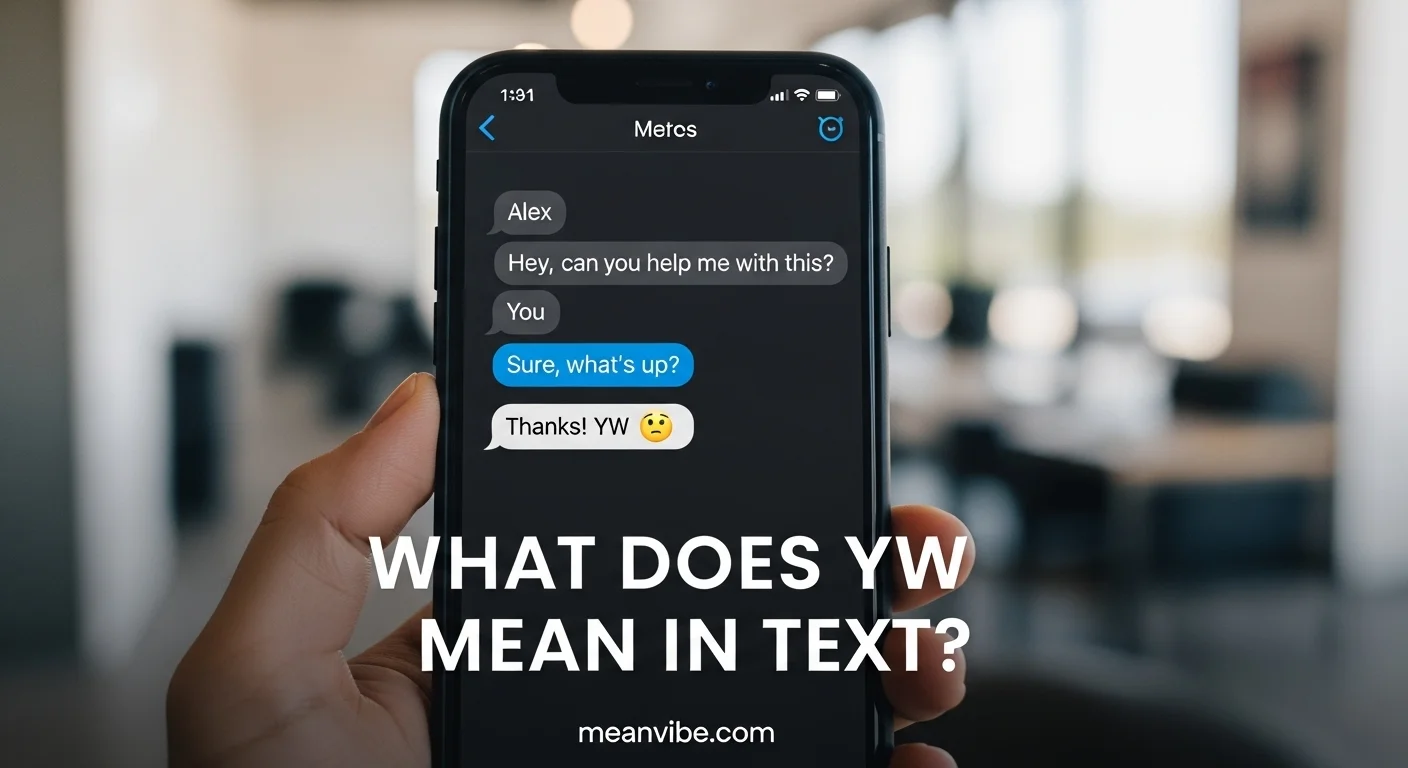
YW stands for “You’re Welcome”. It is used as a polite and concise response after someone says thank you.
Chat-Style Examples
Friend chat:
Alex: “Thanks for helping me with my homework!”
Jamie: “YW, anytime!”
Social media comment:
Post: “Thanks for the tip on the recipe!”
Commenter: “YW! Glad it helped.”
Group chat:
Colleague: “Thanks for covering my shift today.”
You: “YW, happy to help.”
Why This Meaning? Tone & Emotion
Polite and positive: Acknowledges gratitude politely.
Casual and concise: Works well in texting or online messaging.
Friendly tone: Keeps conversations light and approachable.
Other Meanings of YW (Context Matters)
While “You’re Welcome” is the primary meaning, YW can have alternative interpretations in different contexts:
Yaw (angle/rotation): In technical or engineering chats, YW may refer to yaw in 3D rotation or navigation.
Example: “Adjust the drone’s YW for stability.”Your Wish: Occasionally used playfully to imply “your wish is my command.”
Example: “Can you get me coffee?”
Reply: “YW 😉”Young Woman: Rarely, in some social or professional contexts, YW can denote a young woman.
Example: “The event is for YW in our community.”
When to Use It & When to Avoid It
YW is versatile but mainly used in casual texting. Avoid it in formal writing unless context makes sense.
| Context | ✔️/❌ | Notes |
|---|---|---|
| Friend chat | ✔️ | Perfect for polite, casual replies |
| Social media comment | ✔️ | Commonly used in replies |
| Workplace email | ❌ | Too informal; use “You’re welcome” spelled out |
| Group chat | ✔️ | Friendly and concise |
| Technical discussion | ✔️ | Only if using alternative technical meanings |
Usage Tips:
Know your audience: Ensure they understand texting abbreviations.
Keep tone friendly and polite.
Use alternatives for formal settings.
Combine with emojis if you want to make it playful: 🙂👍
Real Conversation Examples
Friend Chat:
Morgan: “Thanks for lending me your notes!”
Taylor: “YW, happy to share.”
Social Media Comment:
Post: “Thanks for sharing this trick!”
Follower: “YW! Glad it helped you.”
Group Chat:
Colleague: “Thanks for coordinating the meeting.”
You: “YW, team effort!”
Related Slang
LOL – Laugh out loud
BRB – Be right back
TTYL – Talk to you later
IDK – I don’t know
FYI – For your information
SMH – Shaking my head
NP – No problem (similar to YW)
Platform Differences
Instagram / TikTok: YW is often used in comment replies or DMs.
WhatsApp / iMessage: Common in personal texts and group chats.
Facebook / Messenger: Works in casual replies to friends’ posts.
Workplace chat / Slack: Only use in informal chats; formal emails should spell out “You’re welcome.”
Gaming chats: YW can be used casually after teammates thank you.