
Table of Contents
What Is SMH? (Primary Meaning)
Why This Meaning? Tone & Emotion
Other Meanings of SMH (Context Matters)
When to Use It & When to Avoid It
Real Conversation Examples
Related Slang
Platform Differences
FAQs
Conclusion
What Is SMH? (Primary Meaning)
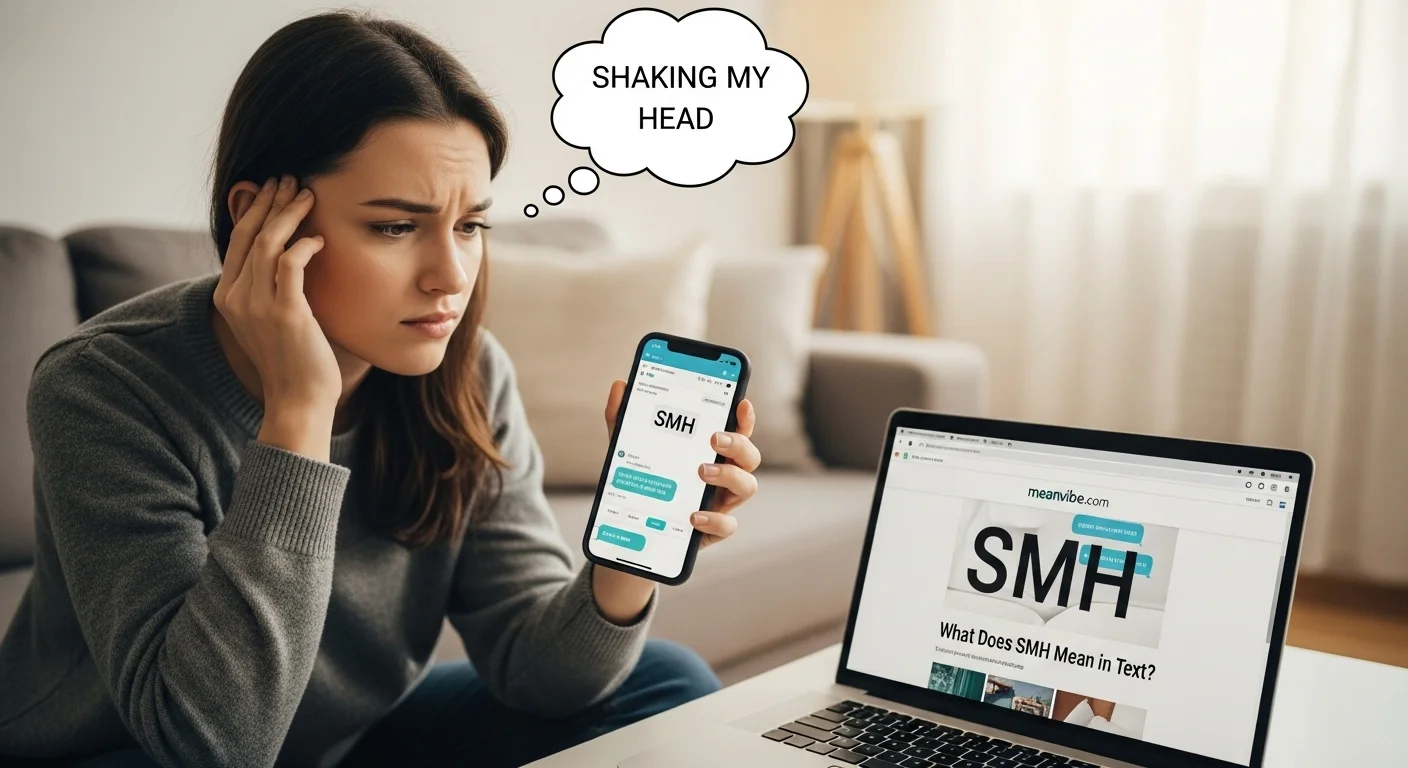
SMH stands for “Shaking My Head.” It’s used to express disbelief, frustration, disappointment, or disapproval in response to something someone said or did. Essentially, it conveys the non-verbal act of shaking one’s head in disapproval—translated into text form.
Chat-Style Examples
Friend chat:
Alex: “I forgot my homework at home.”
Jamie: “SMH… again?!”
Social media comment:
Post: “He tried to microwave metal.”
Commenter: “SMH, why would you do that?”
Workplace chat:
Colleague: “I sent the wrong report to the client.”
You: “SMH… let’s fix it quickly.”
Why This Meaning? Tone & Emotion
Frustration or disbelief: Expresses mild annoyance or disbelief without being aggressive.
Informal: Common in casual texting, not typically professional.
Explanatory shorthand: Saves time while conveying emotion.
Other Meanings of SMH (Context Matters)
While “Shaking My Head” is the primary meaning, SMH can take on other interpretations depending on context:
Sarcastic or humorous: Used jokingly to exaggerate disbelief.
Example: “You ate the last donut? SMH, truly tragic!”Sympathy or pity: Can express concern or mild sadness.
Example: “He missed the bus again. SMH…”Technical or niche uses: Rarely, SMH may appear in specialized contexts, e.g., initials in gaming or group names, but these are uncommon in texting.
When to Use It & When to Avoid It
SMH is casual, expressive, and best suited for informal conversations. Avoid using it in formal emails or professional messages where tone may be misinterpreted.
| Context | ✔️/❌ | Notes |
|---|---|---|
| Friend chat | ✔️ | Perfect for casual use |
| Social media comment | ✔️ | Widely used and accepted |
| Workplace chat | ❌ | Only use informally among close colleagues |
| Texting family | ✔️ | Acceptable if tone is understood |
| Formal email | ❌ | Avoid, may appear unprofessional |
Usage Tips:
Know your audience: Not everyone understands SMH.
Match the channel: Casual texting vs. professional communication.
Consider tone: SMH can convey annoyance, disbelief, or humor.
Combine with emoji for clarity: 😅🤦♂️ for playful or mild frustration.
Real Conversation Examples
Friend Chat:
Morgan: “I just spilled coffee on my laptop.”
Taylor: “SMH… how do you even manage that?”
Social Media Comment:
Post: “He wore socks with sandals again.”
Follower: “SMH, fashion crimes continue.”
Workplace Chat:
Colleague: “Sent the wrong invoice to the client.”
You: “SMH… let’s correct it ASAP.”
Family Text:
Parent: “I forgot your birthday gift.”
You: “SMH… it’s okay, you remembered the card!”
Related Slang
IDK – I don’t know
LOL – Laugh out loud
OMG – Oh my God
BRB – Be right back
FML – F*** my life
TMI – Too much information
Facepalm 🤦 – Expresses similar frustration visually
Platform Differences
Instagram / TikTok: Often used in comments to react humorously or in disbelief.
WhatsApp / iMessage: Common in personal texts, often paired with emojis.
Facebook / Marketplace: Used in casual comments; less common in formal posts.
Workplace chat / Slack: Only appropriate in informal chats with colleagues; not for professional messages.