
Table of Contents
What Is WTV? (Primary Meaning)
Tone & Emotion Behind WTV
Other Meanings of WTV
When to Use It & When to Avoid It
Real Conversation Examples
Related Slang
Platform Differences
FAQs
Conclusion
What Is WTV? (Primary Meaning)
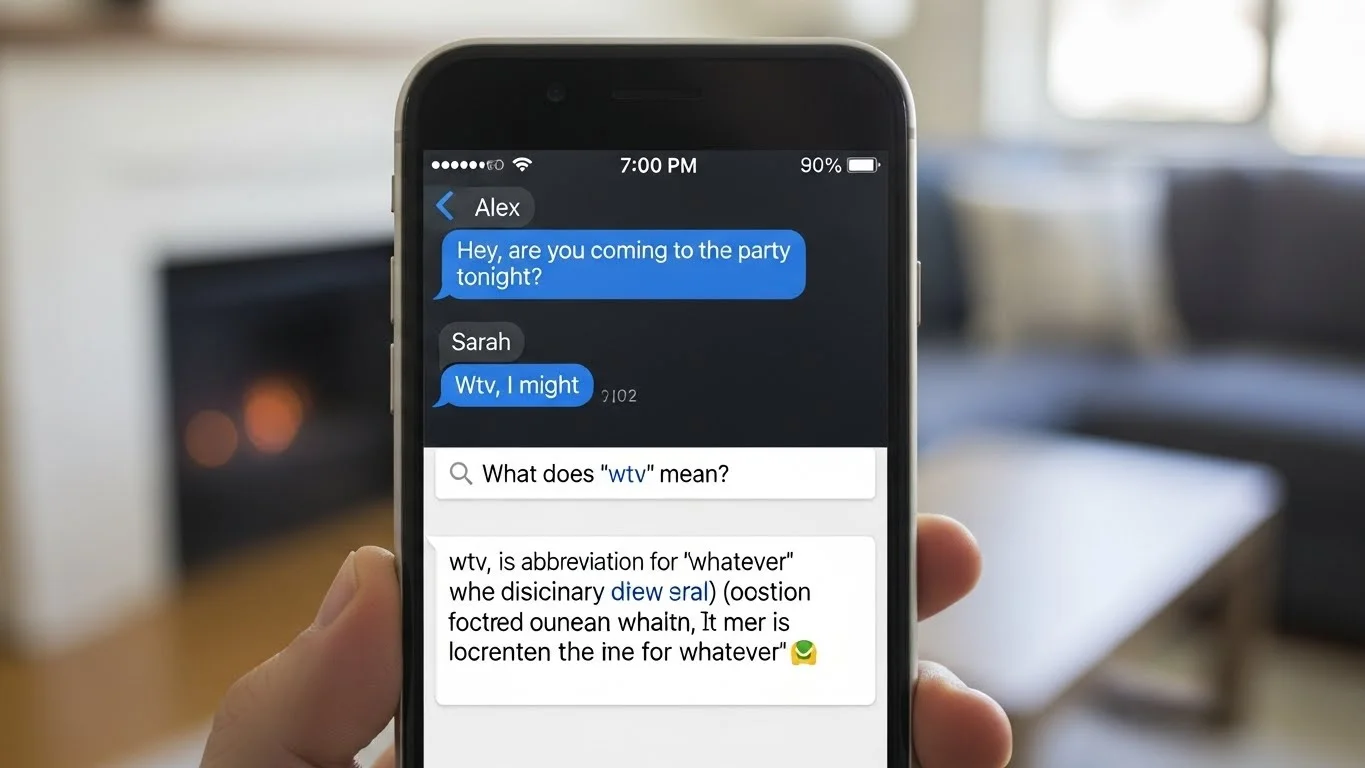
WTV stands for “Whatever.”
It’s used to show indifference, agreement with no preference, or mild annoyance, depending on context and tone.
It’s one of the most common short responses in modern texting because it’s quick and flexible.
Chat-Style Examples
Friend 1: You wanna order pizza or burgers?
Friend 2: WTV, I’m good with anything.
Person A: I told them you weren’t coming.
Person B: WTV, doesn’t matter to me.
Crush: You didn’t reply last night.
You: WTV, I fell asleep 😅
Why This Meaning? Tone & Emotion
WTV can carry different emotional layers depending on punctuation, mood, and relationship between the people texting.
Common tones include:
Casual indifference — you’re okay with any option
Passive annoyance — you’re frustrated but not saying it directly
Emotional shutdown — you no longer want to argue or continue the conversation
Other Meanings of WTV (Context Matters)
While “whatever” is the universal meaning, different settings can change how WTV is interpreted.
1. Neutral Choice (Most Common)
Used when you genuinely don’t care which option is chosen.
Example:
“Movie or café? WTV works.”
2. Avoiding Conflict
Used to stop an argument without escalating.
Example:
“You know what, WTV. I’m done arguing.”
3. Mild Attitude / Sass
Sometimes WTV comes off as dismissive or sarcastic.
Example:
“You said you’d be here at 5.”
“WTV, I got busy.”
4. Gaming / Discord Use
Means “doesn’t matter,” often used during strategy discussion.
Example:
“Which loadout?”
“WTV, let’s just start.”
5. Content Creator Captioning
Used to express carefree, unbothered aesthetic.
Example:
“WTV, I’m living my best life.”
When to Use It & When to Avoid It
Quick Explanation
WTV is flexible, but tone matters. It’s great for casual chats but risky in emotional or professional contexts.
Usage Table
| Context | ✔️/❌ | Notes |
|---|---|---|
| Friends texting casually | ✔️ | Sounds natural and chill |
| Making plans | ✔️ | Shows flexibility |
| Heated arguments | ❌ | May escalate tension |
| Messaging your partner | ✔️ / ❌ | Depends on emotional tone |
| Family chats | ✔️ | Usually neutral |
| Workplace messaging | ❌ | Too informal and unclear |
| Online comments | ✔️ | Often used in memes or replies |
| Marketplace / business chats | ❌ | Can sound rude or uninterested |
4 Usage Tips
Know your audience — WTV can accidentally sound rude
Avoid in serious discussions — it may appear dismissive
Add emojis when using it lightly — “wtv 😅” softens tone
Don’t use it in professional settings — it signals low engagement
Real Conversation Examples
1. Planning with Friends
Liam: Sushi or tacos tonight?
Mina: WTV, both sound good.
2. Minor Argument
Alex: You never listen.
Jess: WTV, believe what you want.
3. Snapchat Chat
Friend: Should I post this pic or the other one?
You: WTV, they’re both cute lol.
4. Relationship Texting
Partner: Do you want to talk now or later?
You: WTV… whenever you’re free.
5. Marketplace Chat
Seller: Price is fixed.
Buyer: Okay wtv.
(Sounds uninterested or annoyed)
Related Slang
IDC — I don’t care
IDK — I don’t know
NVM — Never mind
IDRC — I don’t really care
TBH — To be honest
SMH — Shaking my head
LMK — Let me know
IG — I guess
Platform Differences
Instagram / WhatsApp
Used casually in group chats, stories, comments, and close-friend convos.
Tone ranges from playful to mildly annoyed.
Snapchat
Common in streak chats. Often used jokingly or with emojis to soften tone.
TikTok
Used in captions, comments, or “unbothered” content aesthetics.
Example: “WTV I like how I look.”
Facebook / Marketplace
Can sound rude, passive, or uninterested.
People often interpret WTV here as dismissive.
Gaming (Discord, Xbox, PlayStation)
Means “doesn’t matter,” used for quick decision-making.
Workplace Apps (Slack, Teams)
Avoid completely. It looks careless and unprofessional.