
Have you ever felt that sudden anxiety when you see friends hanging out on social media without you? 🤔 That pang of worry that you’re missing something exciting?
If yes, you’re experiencing FOMO. In this article, we’ll dive deep into the FOMO meaning in text, its origin, real-life examples, and how it affects our daily interactions.
What Does FOMO Mean in Text? 🤳
FOMO stands for Fear Of Missing Out. It’s a term widely used in texting, messaging apps, and social media conversations to describe that feeling of anxiety when you think you’re missing out on fun, events, or opportunities.
For example:
- “I can’t believe I missed the concert last night 😩 total FOMO!”
- “Seeing everyone’s vacation pictures gave me serious FOMO 🌴”
Origin of FOMO: Where It All Began 🌍
The term FOMO was first coined in the early 2000s. It quickly gained popularity as social media platforms like Facebook and Instagram became mainstream. People realized they were constantly comparing their lives to others, leading to a widespread feeling of missing out.
Fun Fact: FOMO isn’t just about events. It can also apply to trends, fashion, job opportunities, or even knowledge gaps!
Why FOMO Happens: The Psychology Behind It 🧠
FOMO is deeply rooted in human psychology. Here are the main triggers:
- Social Comparison: Seeing others’ achievements or experiences.
- Fear of Regret: Worrying about making the wrong choice.
- Peer Pressure: Feeling the need to join activities to fit in.
- Digital Exposure: Constant notifications and updates.
How FOMO Appears in Text Messages 📩
In texting, FOMO is often expressed through short, emotional messages. It can be:
- Directly mentioning missing out: “I have serious FOMO from that party!”
- Using emojis to express envy or sadness 😢🤯
- Reacting to friends’ updates: “Wow, you’re at the concert without me?”
FOMO vs. JOMO: Understanding the Difference ✨
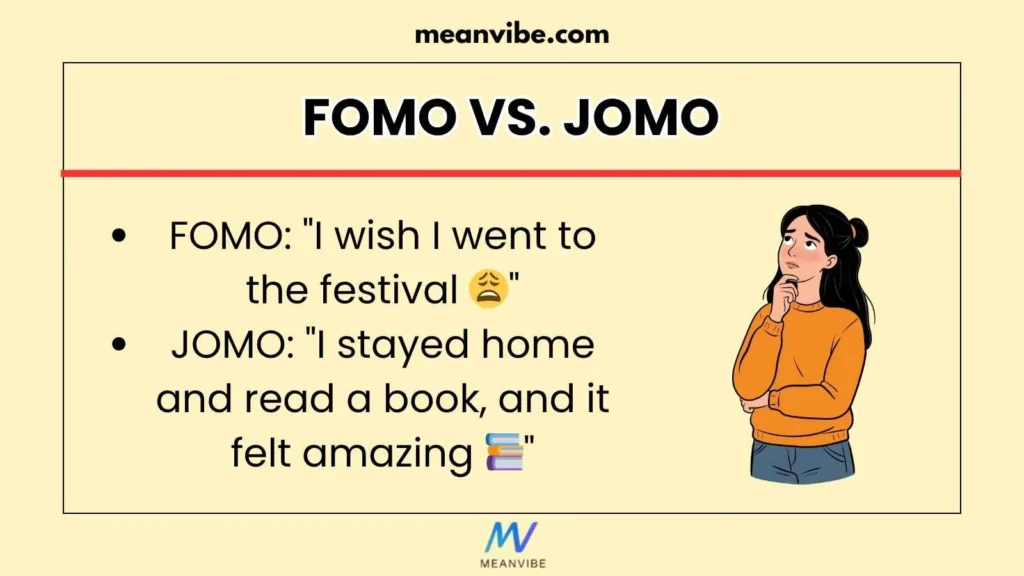
While FOMO is about fear, JOMO (Joy Of Missing Out) is the opposite. It’s about embracing solitude, focusing on self-growth, and enjoying life without social comparison.
Example:
- FOMO: “I wish I went to the festival 😩”
- JOMO: “I stayed home and read a book, and it felt amazing 📚”
Common FOMO Examples in Texting 💬
| Scenario | Text Example |
|---|---|
| Party Invitation | “Wish I was at your party! Total FOMO 😭” |
| Vacation Photos | “Your beach pics are making me feel some serious FOMO 🌊” |
| New Trend | “Everyone’s talking about the new app. I have FOMO!” |
| Concerts or Events | “OMG, I missed the concert 😩 #FOMO” |
FOMO in Social Media: The Digital Connection 🌐
Platforms like Instagram, Snapchat, and TikTok amplify FOMO. Constant stories, live updates, and reels make people feel like they’re missing life-changing experiences.
Tips to Reduce Social Media FOMO:
- Limit daily screen time ⏱️
- Unfollow accounts that trigger negative feelings 🙅♀️
- Focus on your own achievements and moments ✨
How FOMO Impacts Mental Health 💔
Continuous FOMO can lead to:
- Anxiety and stress 😰
- Low self-esteem 😞
- Sleep disturbances 🛌
- Overconsumption of social media 📲
Quote: “Comparison is the thief of joy.” – Often attributed to Theodore Roosevelt
FOMO in Relationships 💑
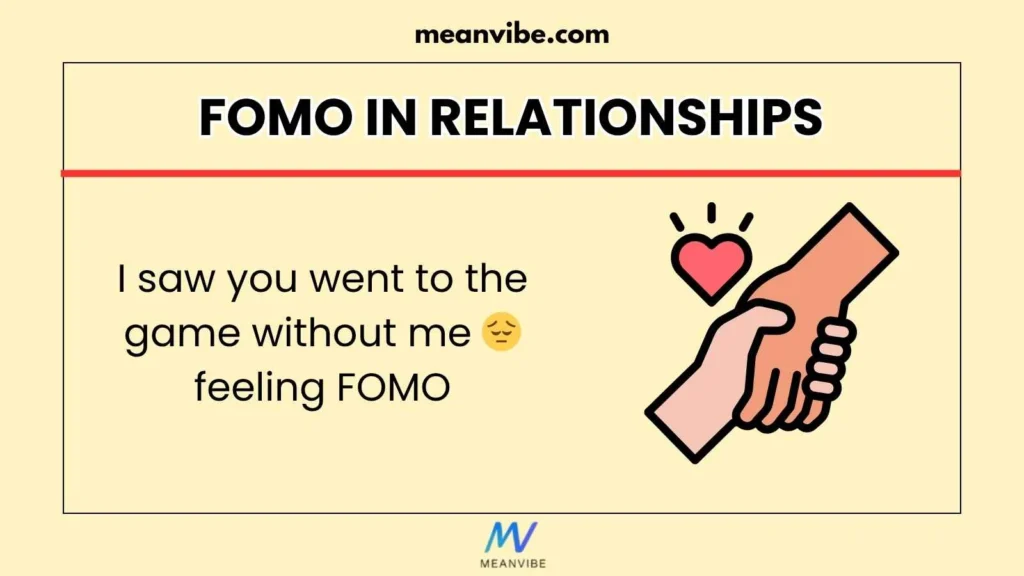
FOMO doesn’t just appear online—it can affect personal relationships. Seeing friends, partners, or colleagues engage in activities without you can create feelings of exclusion or jealousy.
Example in text:
“I saw you went to the game without me 😔 feeling FOMO!”
Strategies to Manage FOMO Effectively ✅
Overcoming FOMO requires awareness and action. Here are expert tips:
- Mindful Living: Focus on the present moment and appreciate what you have.
- Set Boundaries: Limit social media and notifications.
- Practice Gratitude: Keep a journal to acknowledge your achievements.
- Prioritize Meaningful Experiences: Choose activities that genuinely make you happy.
FOMO in Text Slang and Online Communication 🌟
Texting shorthand often uses FOMO casually. For example:
- “I have FOMO over your brunch pics 🥐”
- “Everyone’s at the concert… major FOMO!”
- “Missed the launch party 😩 FOMO vibes only”
Using emojis alongside FOMO emphasizes the emotional intensity, making texts more expressive and relatable.
FOMO in the Workplace 🏢
FOMO isn’t limited to social life—it also impacts careers. Missing a project update, meeting, or networking opportunity can create workplace anxiety.
Tips to handle FOMO at work:
- Stay informed but avoid micromanaging notifications.
- Focus on high-priority tasks, not every update.
- Celebrate your progress rather than comparing to colleagues.
FOMO in Pop Culture and Trends 🎵🎬
Pop culture is full of FOMO triggers—from viral TikTok challenges to trending fashion. Knowing how FOMO drives engagement can help you make conscious choices rather than impulsive reactions.
How to Use FOMO Positively 🚀
While FOMO can cause stress, it can also motivate you:
- Encourage trying new experiences 🏄♂️
- Stay updated on important events 📅
- Improve social skills and networking 🤝
Signs You Might Be Experiencing FOMO 🤔
- Constantly checking social media for updates
- Feeling anxious when missing events or notifications
- Overcommitting to social plans
- Comparing your life with others frequently
FOMO vs. Healthy Curiosity 🌱
Not every desire to explore is FOMO. Healthy curiosity drives personal growth, whereas FOMO comes from fear, comparison, and anxiety.
Real-Life FOMO Stories 💌
Here’s an example story:
“Last summer, I stayed home while friends went on a road trip. I kept scrolling through their photos, feeling anxious and left out. Later, I realized I enjoyed my own solo time, and FOMO faded.” – Emma, 24
Expert Advice: Overcoming FOMO 🔑
Experts recommend mindfulness, journaling, and intentional living. By focusing on your own experiences and limiting unnecessary comparisons, FOMO becomes manageable.
FAQs
1. What does FOMO mean in texting?
It stands for Fear Of Missing Out, usually expressing anxiety about missing events, trends, or experiences.
2. Is FOMO only related to social media?
No, FOMO can appear in social, professional, or personal settings. Social media amplifies it but isn’t the only cause.
3. How can I overcome FOMO?
Focus on mindfulness, limit social media, practice gratitude, and prioritize meaningful experiences.
4. Can FOMO be positive?
Yes! It can motivate you to try new things, explore opportunities, and stay informed—but it should be managed carefully.
5. What’s the difference between FOMO and JOMO?
FOMO is fear-driven and anxiety-inducing, while JOMO (Joy Of Missing Out) embraces solitude and contentment.
Conclusion:
Understanding FOMO meaning in text helps us recognize emotional triggers, manage anxiety, and build healthier social habits.
While it’s natural to feel left out sometimes, awareness and mindful choices can transform FOMO from a stressor into a motivator. 🌟