

In the fast-paced world of online messaging and texting, abbreviations are everywhere! One acronym you may have stumbled upon is HRU. But what does it really mean? 🤔
Whether you’re texting your friends, chatting on social media, or navigating online forums, understanding these shorthand phrases can save time and prevent confusion.
What Does HRU Mean? 💡
HRU is a popular internet abbreviation that stands for “How Are You?”. It’s a quick, casual way to check in on someone without typing the full phrase. It’s widely used in text messages, online chats, and social media platforms.
Key Points About HRU:
- Stands for How Are You?
- Used in informal conversations
- Common in texting, Discord, WhatsApp, and social media chats
- Shows friendliness and care in a quick way
Origin of HRU 📜
The use of abbreviations like HRU dates back to the early days of SMS texting in the late 1990s and early 2000s. Mobile devices had character limits, so people created shorthand to communicate faster. HRU became a standard because checking on someone’s well-being is a common social gesture, and texting required brevity.
Why People Use HRU in Texts ✨
- Speed: Typing “HRU” is faster than “How are you?”
- Casual Tone: It feels friendly and informal
- Space-saving: Works well in character-limited messages
- Trendiness: Using acronyms shows you’re in touch with modern texting culture
Examples of HRU in Text Conversations 💬
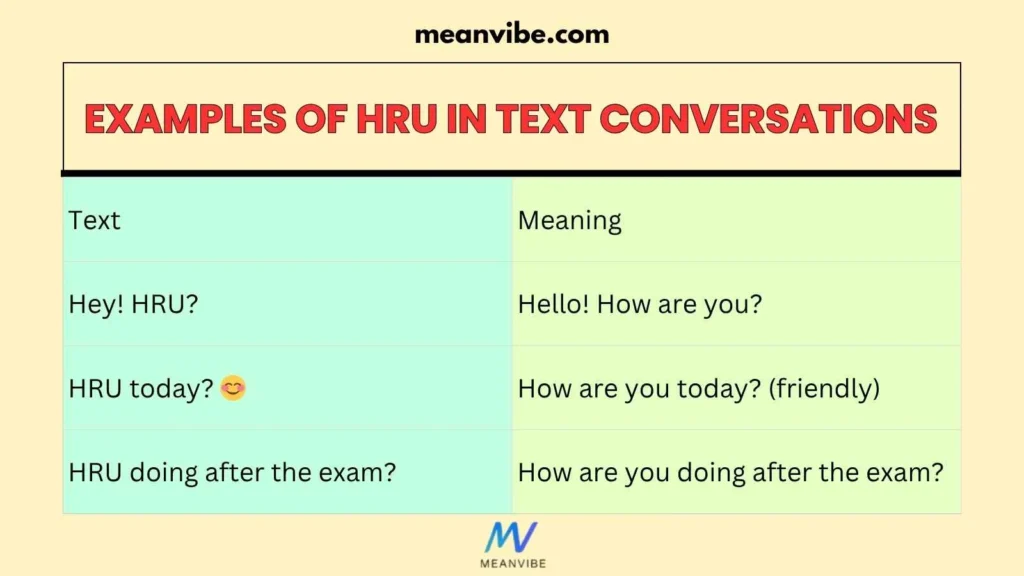
| Text | Meaning |
|---|---|
| Hey! HRU? | Hello! How are you? |
| HRU today? 😊 | How are you today? (friendly) |
| HRU doing after the exam? | How are you doing after the exam? |
HRU vs Other Similar Abbreviations 🔄
HRU is one among many texting abbreviations. Here’s how it compares:
- HBU: How about you?
- RUOK: Are you okay?
- WYD: What are you doing?
Using the right abbreviation can make your messages clearer and more effective.
How to Respond to HRU ✅
Responding to HRU is simple! Here are some examples:
- Casual: “I’m good, thanks! HRU?”
- Friendly: “Doing well! How about you?”
- Playful: “Surviving 😂 HRU?”
When Not to Use HRU ❌
While HRU is friendly, it’s best avoided in formal contexts:
- Professional emails or work chats
- With people you don’t know well
- Serious or sensitive conversations
HRU in Different Messaging Platforms 🌐
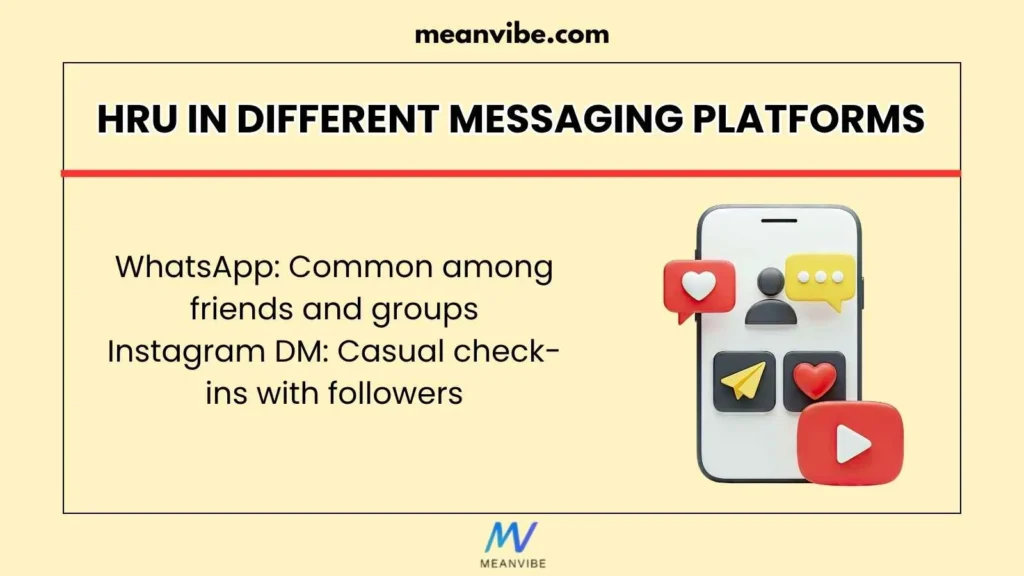
HRU is platform-friendly but usage varies:
- WhatsApp: Common among friends and groups
- Instagram DM: Casual check-ins with followers
- Discord: Quick conversation starter in servers
- SMS: Traditional texting shorthand
Fun Facts About HRU 😄
- HRU is often combined with emojis to show emotion, e.g., “HRU? 😊”
- It’s one of the top 20 texting abbreviations used by teens worldwide
- Some people use it multiple times a day, making it a staple in casual chat
Table: HRU Usage Frequency by Age Group 📊
| Age Group | HRU Usage |
|---|---|
| 13–18 | High |
| 19–25 | Moderate |
| 26–35 | Low |
| 36+ | Rare |
Tips to Use HRU Effectively 📝
- Keep it casual: Use with friends or peers
- Add emojis: Enhance friendliness and emotion
- Follow up: Respond genuinely after asking HRU
- Combine with other abbreviations: e.g., “HRU? HBU?”
Common Mistakes with HRU ⚠️
- Using HRU in professional or serious contexts
- Assuming everyone understands the abbreviation
- Ignoring proper etiquette after asking (don’t leave the question hanging)
HRU and Texting Culture 🌟
HRU is more than just an abbreviation—it’s a reflection of how digital communication has evolved. People value quick, friendly check-ins, and HRU fulfills this need without formalities. It’s part of a broader trend of instant, casual communication that defines today’s texting culture.
HRU and Emotional Connection ❤️

Even though it’s short, HRU conveys care. Asking someone “HRU?” shows interest in their well-being and strengthens connections in a subtle, easy way. Pair it with emojis or follow-up questions to deepen your interaction.
FAQs
1. Can I use HRU in professional emails?
No. HRU is informal and best suited for casual conversations. In professional contexts, use “How are you?” instead.
2. Is HRU understood worldwide?
Mostly in English-speaking countries. Some non-native speakers may not recognize it, so adjust accordingly.
3. What’s the difference between HRU and HBU?
HRU asks about the person’s well-being, while HBU (“How about you?”) is usually a response to a previous question.
4. Are there variations of HRU?
Yes! People sometimes add emojis or write “HRU?” in lowercase to keep it casual and friendly.
5. How often should I ask HRU?
Use it naturally, not excessively. Asking HRU too often may seem repetitive or insincere.
Conclusion:
HRU is a simple, yet powerful texting abbreviation that helps you stay connected in today’s fast-paced digital world.
By understanding its meaning, origin, and proper usage, you can communicate efficiently while maintaining friendliness and emotional warmth.
Remember, context matters—HRU shines in casual chats, not formal setting
.